
Habitat Screen Applications BC for Windows, Doors, Patios & More
Habitat Screens can be used in more than one part of a property. Depending on the opening and the intended purpose, they can provide exterior solar shading for windows, help manage glare and privacy around doors, or create a more comfortable environment in patios, decks and other outdoor spaces.
Avant Guard Gates offers Talius Habitat Screen solutions for properties across British Columbia. The appropriate system depends on the opening, available mounting conditions, sun exposure, desired visibility, privacy requirements and how the screen will be operated.
Rather than choosing a screen based only on the name of the product, it is useful to start with the application. Understanding where the screen will be installed and what you want it to accomplish makes it easier to determine which configuration is appropriate.
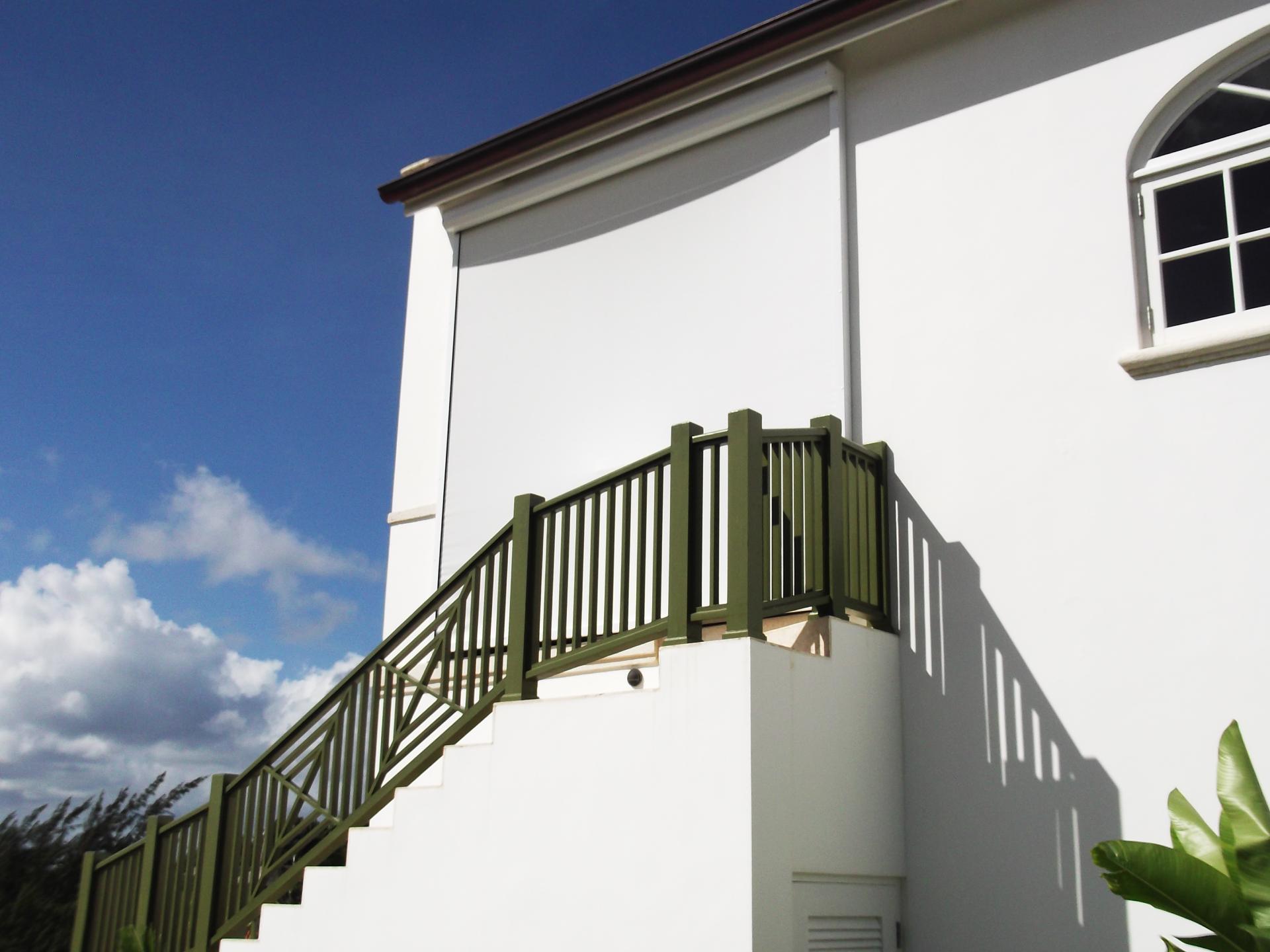
Where Can Habitat Screens Be Used?
Talius identifies several applications for Habitat Screens, including:
- Windows
- Patios and decks
- Gazebos
- Doors
- Garages
Different applications can have very different requirements. A window may primarily need solar and glare control, while a patio screen may be intended to improve outdoor comfort and privacy.
The screen, fabric and operating method should therefore be selected around the specific application.
Habitat Screens for Windows
Windows are one of the primary applications for exterior Habitat Screens.
Because the screen is positioned outside the glass, it can address sunlight before it reaches the window. This makes exterior shading particularly relevant for windows that receive significant direct sun.
Solar Shading for Exposed Windows
Sun-facing windows can contribute to glare and solar heat entering a room.
A Habitat Screen can provide an exterior layer of shading while remaining retractable when it is not required.
The amount of solar protection depends on the selected screen fabric and the conditions of the installation.
Managing Glare
Direct sunlight can make certain rooms uncomfortable to use, particularly when the space includes televisions, computer screens or other surfaces affected by glare.
The right screen fabric can help manage solar exposure while maintaining some level of outward visibility.
Maintaining the View
Exterior shading does not necessarily mean giving up the view.
Talius offers different fabric weave densities that allow the level of openness to be considered alongside solar protection and privacy.
This makes fabric selection particularly important for windows where maintaining an exterior view is a priority.
Residential Window Applications
For homes, Habitat Screens can be considered for:
- Living-room windows
- Large picture windows
- Large glazed openings
- Bedroom windows
- Sun-exposed windows
- Windows overlooking neighbouring properties
The right configuration depends on the specific room and window.
Commercial Window Applications
Commercial buildings can also use Habitat Screens for suitable windows.
Potential applications include offices, retail spaces and other occupied areas where solar exposure, glare or privacy needs to be managed.
For larger commercial projects, window orientation, opening dimensions, mounting conditions and operating requirements should be evaluated as part of the overall project.
Habitat Screens for Doors
Doors and large glazed openings can introduce significant sunlight into a property.
A suitable exterior screen can provide shading while allowing the opening to remain visually connected to the outside.
Habitat Screens may be considered for appropriate:
- Exterior doors
- Large glazed door openings
- Patio doors
- Other suitable building openings
The exact installation approach depends on the opening and available mounting conditions.
For frequently used doors, operation is also an important consideration. A screen that is manually operated may be suitable in one location, while another opening may benefit from motorized operation.
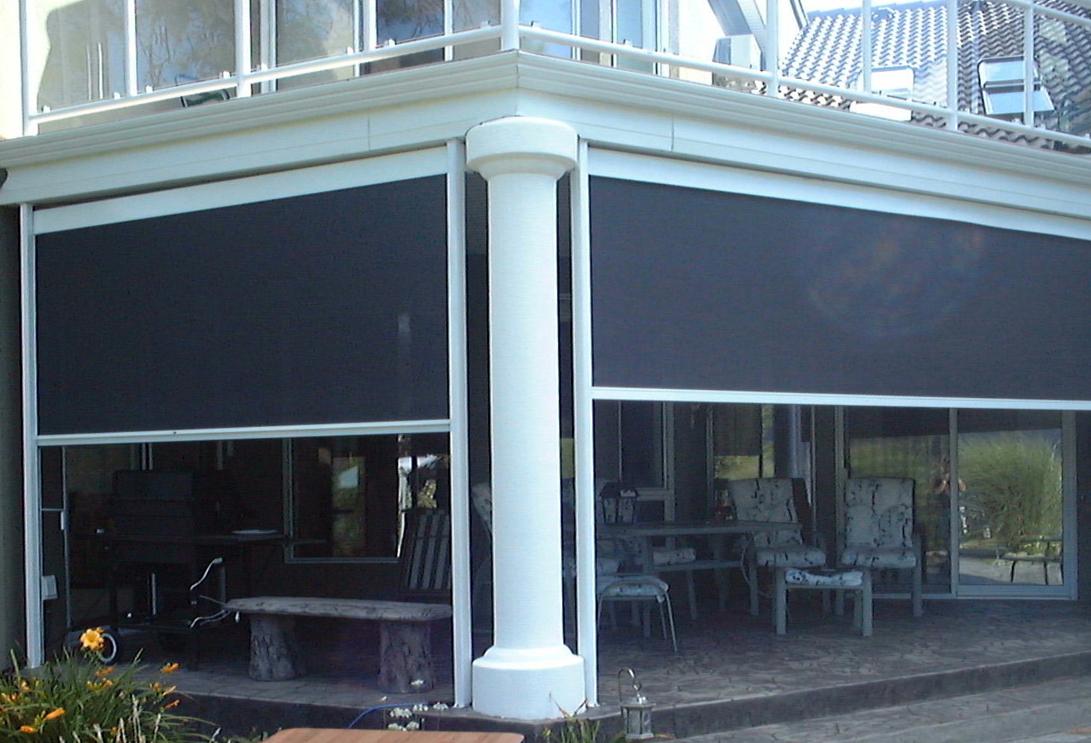
Habitat Screens for Patios and Decks
Patios and decks are another important Habitat Screen application.
An open outdoor area can be enjoyable when conditions are comfortable, but direct sun can limit how and when the space is used.
A retractable exterior screen can provide shading when needed and be raised when an open outdoor environment is preferred.
Patio Shading
For patios exposed to strong sunlight, Habitat Screens can provide an adjustable layer of exterior shading.
The goal is not necessarily to enclose the entire patio permanently. Instead, the retractable system can allow the homeowner or property operator to control the space according to the conditions.
Deck Applications
Decks can similarly benefit from retractable exterior screens.
Potential considerations include:
- Direction of sun exposure
- Desired privacy
- Frequency of use
- Available mounting locations
- Outdoor visibility
- Manual or motorized operation
The specific screen configuration should be assessed based on the structure and opening.
Outdoor Living Areas
Talius identifies outdoor living areas such as patios and decks among the applications for Habitat Screens.
This can make the system useful where the objective is to create a more comfortable outdoor environment without permanently enclosing the space.
Habitat Screens for Gazebos
Gazebos can provide shade and shelter while remaining open to the surrounding property.
Adding retractable screens to suitable sides can provide another level of control over sun exposure and privacy.
For gazebo applications, consider:
- Available structural mounting points
- Desired openness
- Screen operation
- Direction of sunlight
- Privacy requirements
- The overall appearance of the structure
A site assessment can help determine whether the structure can accommodate the desired screen configuration.
Habitat Screens for Garages and Similar Spaces
Talius also identifies garages among potential Habitat Screen applications.
A suitable garage opening can potentially be screened to provide greater control over sunlight, privacy and the conditions within the space while retaining the ability to open the area when required.
The suitability of a garage application depends on the opening, surrounding structure and intended use.
For any non-standard opening, these conditions should be evaluated before selecting a system.
Choosing the Right Habitat Screen for the Application
The same screen configuration does not necessarily make sense for every application.
A useful starting point is to identify four things:
1. What is the opening?
Is it a:
- Window
- Patio
- Gazebo
- Other suitable opening
- Door
- Deck
- Garage
The opening affects the available installation and operating options.
2. What problem are you trying to solve?
The primary objective could be:
- Solar shading
- Privacy
- Outdoor comfort
- A combination of these
- Glare management
- UV protection
- Maintaining visibility
Identifying the primary objective helps narrow down the appropriate fabric and system.
3. How much visibility do you want?
Different screen fabrics offer different levels of openness.
A more open fabric may be appropriate when maintaining the view is a major priority, while a denser option may be considered when stronger solar or privacy control is required.
4. How will the screen be operated?
Consider how often the screen will be raised or lowered and how accessible the screen is.
Manual operation may be suitable for some applications, while motorized operation may make more sense for frequently adjusted screens or multiple openings.
Habitat Screen Applications by Property Type
Although this page focuses on applications rather than customer type, the same application can serve different property types.
Homes
Residential applications commonly include windows, patio doors, decks, patios and gazebos. The homeowner may be primarily concerned with comfort, solar exposure, privacy or maintaining an outdoor view
Commercial Properties
Decks can similarly benefit from retractable exterior screens.
Commercial applications can include windows, doors, outdoor areas and other suitable building openings.
Property managers and building owners may need to consider occupant comfort, glare, appearance, privacy, operation and the requirements of multiple openings.
Other Buildings and Properties
Habitat Screens may also be considered for other suitable building applications where exterior solar shading or retractable screening is required. The application should always be assessed according to the building's design and intended use.
Selecting the Right Fabric for the Application
Fabric selection should be based on the specific application rather than simply choosing the highest level of shading.
Talius provides different fabric weave densities for Habitat Screens, allowing the system to be configured around different levels of openness, solar protection and privacy.
When Visibility Matters
If the opening overlooks a garden, street, landscape or other desirable view, a more open fabric may be appropriate.
When Solar Protection Is the Priority
For highly exposed windows or outdoor spaces, a denser fabric may be worth considering when stronger solar protection is the primary objective.
When Privacy Matters
Privacy requirements should be evaluated alongside visibility.
Daytime privacy can depend on both the selected fabric and the relative lighting conditions inside and outside the building.
The right balance depends on how the space is used.
Habitat Screens vs Other Exterior Solutions
Not every shading or screening requirement calls for the same product.
Habitat Screens are primarily relevant when the objective involves retractable exterior shading, solar exposure, privacy, visibility or outdoor comfort.
Other Avant Guard products address different requirements.
For example:
- Security roll shutters are designed for security and protection applications.
- Retractable awnings provide another approach to exterior shading.
- Security gates and window bars address physical security requirements.
- Access control and gate automation address controlled entry and property access.
Understanding the actual problem is therefore an important first step in selecting the appropriate product.
Why Choose Avant Guard Gates?
Avant Guard Gates offers Talius Habitat Screen solutions as part of its broader range of exterior property products.
The company has served British Columbia since 2000 and provides end-to-end services across its broader offering, including design, custom fabrication, installation, maintenance and repair.
For customers in Surrey, Vancouver, the Lower Mainland and other parts of British Columbia, the project can be evaluated around the specific application rather than relying on a generic screen recommendation.
If you already know which openings you want to screen, providing those details when requesting a quote can help make the initial project discussion more productive.
Questions
Frequently Asked Questions
Q: Can habitat screens be installed on any type of opening or structure?
A: Most applications are feasible. During site assessment, we identify any structural constraints or special requirements and recommend the best installation approach. Unusual openings or complex applications may require custom engineering—this is our specialty.
Q: How do I know if I need motorized or manual screens for my application?
A: Consider frequency. If screens are deployed daily or multiple times per day, motorization is worthwhile (convenience justifies cost). If deployed seasonally or weekly, manual operation may be adequate. For large openings or multiple screens, motorization reduces operational burden significantly.
Q: Can screens remain deployed year-round, or must they be raised seasonally?
A: Screens can remain deployed or raised depending on your preference. Many applications benefit from year-round deployment (heat control in summer, weather protection in winter). Some prefer seasonal deployment (spring/summer only). The choice is yours—screens are flexible.
Q: What's the typical cost for application-specific screens?
A: Cost varies based on opening size, motorization, fabric choice, and customization. A small pergola screen might cost $3,500 – $6,000. A large patio system could cost $15,000 – $30,000+. Avant Guard Gates provides transparent quotes after site assessment.
Q: Can screens be automated for specific applications (like scheduled deployment)?
A: Yes. Motorized systems can be programmed for scheduled operation (close at sunset, open at sunrise), wind-responsive operation (auto-retract if winds exceed safe thresholds), sun-responsive operation (deploy when glare/heat reaches preset threshold). Customization depends on your specific application.
Q: What if my application involves a non-standard or very large opening?
A: Habitat screens accommodate openings up to 19+ feet wide. Extra-large openings may use multi-panel systems or split operation. During assessment, we design solutions for any size opening.
Q: How do screens perform in BC's coastal vs. mountain climate?
A: Screens are engineered for both environments. Coastal applications use corrosion-resistant materials. Mountain applications withstand temperature extremes and heavy weather. Wind sensors protect equipment in either climate during extreme conditions.
Q: Can screens be installed on existing structures, or only during new construction?
A: Retrofit installation is our primary expertise. Screens installed on existing structures (homes, patios, pergolas, sunrooms) without requiring structural modifications. Most commercial installations are retrofits.
Q: What about maintenance for my specific application?
A: Maintenance requirements depend on deployment frequency and climate. Annual inspection is standard; high-use commercial applications may benefit from more frequent servicing. Motorized systems require periodic mechanical maintenance (similar to garage doors). Opaque fabrics are lower-maintenance than clear (which requires careful cleaning to maintain visibility).
Request a Application Habitat Screens Quote
Considering security roll shutters for your home in British Columbia?
Whether you are looking to protect windows, doors, a garage opening or another vulnerable area, Avant Guard Gates can help you explore the available options.
Tell us about your home, the openings you want to protect and your primary requirements. We can help you determine an appropriate security shutter solution for your property.
Request a quote from Avant Guard Gates to discuss your Application Habitat Screens